Flock ALPR Cameras

no4mk1t

Mega-Patriot!
Exchange Privileges
Top Poster Of Month
Joined
Feb 27, 2022
Messages
7,162
Reaction score
10,080
Points
168
Location
Dixie
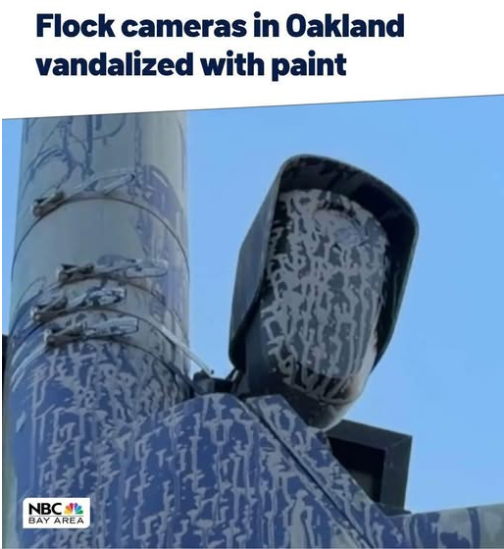
These are going up at an alarming rate all over.
In the UK, a group called the "Blade Runners" have been using battery sawzalls to combat the issue.
In CA, it seems the paint ball gun is the tool of choice.

1777661862921.png


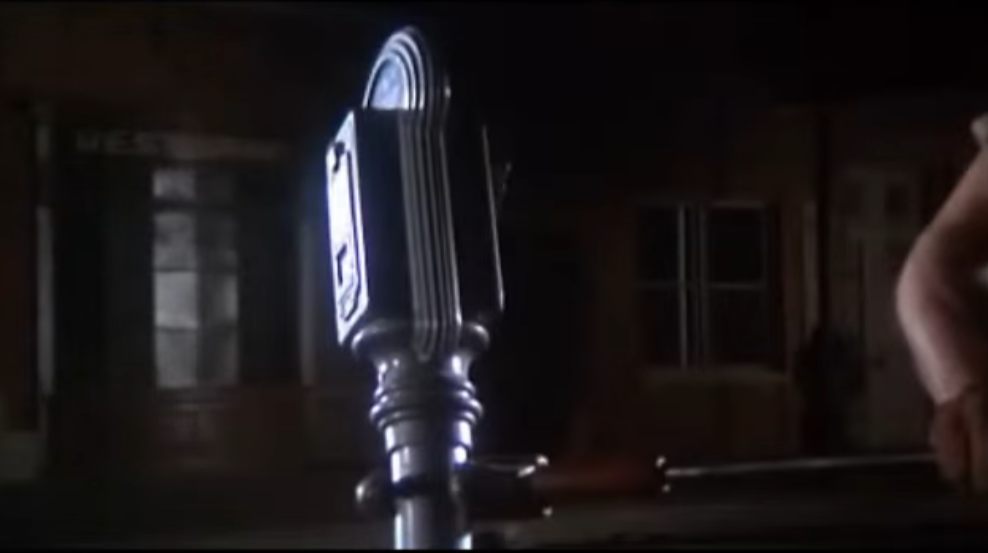
I'm just wondering if anyone remembers the opening scene in Cool Hand Luke?
Pipe cutter is a lot quieter than a sawzall... :ROFLMAO:

1777661972290.png
 
Here is a map of all the camera locations nationwide and a routing feature to avoid the cameras in case you ever rob a bank... 😯

 
Here is a map of all the camera locations nationwide and a routing feature to avoid the cameras in case you ever rob a bank... 😯

Glad to see none in my neck of the woods.
 
Glad to see none in my neck of the woods.
I drive by at least two on my way out of town in ANY direction. I COULD avoid them but I'm not wanted so there is that. Any detour would be at least 5min.

But it seems the scanners are ALWAYS pinching someone with resultant police chase and so on.
 
The big issue here is privacy.
They promote these cameras as a public safety thing. Catch bad guys etc.
But we all know that if they can do something that is not intended, eventually they will.
The system is very capable of building a travel dossier on everyone.
They say the system default on saving pics is 90 days.
But each agency has the option to change that setting to indefinite if they want to.
How long do you think it will be before they start building a file on each of you?
 
The big issue here is privacy.
They promote these cameras as a public safety thing. Catch bad guys etc.
But we all know that if they can do something that is not intended, eventually they will.
The system is very capable of building a travel dossier on everyone.
They say the system default on saving pics is 90 days.
But each agency has the option to change that setting to indefinite if they want to.
How long do you think it will be before they start building a file on each of you?

I don't believe there is any reasonable or legal or constitutional expectation of privacy when you're out in public. Similarly, you can't stop me from taking a photo or video of you in a public space. Similarly, we can record public officials (including police) in a public space (as long as we are not interfering with their duties).

To my knowledge there is no legal expectation of privacy when you're in a public space, which would include out on the roads.
 
I don't believe there is any reasonable or legal or constitutional expectation of privacy when you're out in public. Similarly, you can't stop me from taking a photo or video of you in a public space. Similarly, we can record public officials (including police) in a public space (as long as we are not interfering with their duties).

To my knowledge there is no legal expectation of privacy when you're in a public space, which would include out on the roads.
It is quite a big difference between taking a random photo of you in public and having a system in place that records your every move.
They can say they are only looking for criminals now, but if the ability exists, they will eventually use it to build a file on us all. Right now, there is no legal constraint on this.
 
It is quite a big difference between taking a random photo of you in public and having a system in place that records your every move.

I did a little research. Interesting... So, the difference is whether ALL your movements are recorded and pieced together (without a warrant) or it's just random short recording in various places without them being assembled into a contiguous documentation of your movement.


  • United States v. Knotts (1983): Police used a beeper to track a car's movements on public roads. The Court ruled there was no reasonable expectation of privacy in movements visible on public thoroughfares, because anyone could have followed the car visually. Short-term visual or limited electronic tracking of public movements is generally allowed.

  • Carpenter v. United States (2018): The Court recognized a reasonable expectation of privacy in the "whole of one's physical movements" over time, even when those movements occur entirely in public. Police obtained 127 days of historical cell-site location information (CSLI) without a warrant; the Court held this was a search requiring a warrant. Long-term, comprehensive tracking (via technology) reveals intimate details of a person's life that society deems private, even in public spaces. This case limited earlier precedents like Knotts for modern digital surveillance.
 
This is an issue that will only expand in scope as time goes by. When the ALPR tech was rolled out, it's purpose was stated as crime prevention/solving/safety in areas that had a crime problem. They even named the company "Flock Safety" to make it sound benign. Flock Surveillance would have made it a harder sell to city councils.
Now they are rapidly being deployed everywhere.

Right now, the Flock cameras cannot perform facial recognition.
How long do you think it will be before a need is determined and that capability is added.

Even if they don't, right now Flock provides cloud storage for all the images and those images are available, supposedly, only to other LE agencies. As this article below states, some of these ALPR systems have already been hacked.
So, if you are annoyed by targeted advertising from your phone listening in, wait until your location data is sold to the data brokers.

Many Lowe's locations now have Flock cameras and share the data with LE. The three in my area have multiple cameras in their parking lots.

Recently, the FAA issued a directive that the ADSB system that is intended for flight safety purposes be used only for that.
It has been being used by FBO's to identify aircraft owners and bill them for all the fees FBO's are notorious for adding on to your bill.
More unintended consequences.

How long before states with budget deficits figure out that for the price of a few Flock cameras, any road can be a toll road. Same for the states talking about eliminating income/property tax. That money has to be made up elsewhere, because we all know gov't is not going to curtail spending. This would be a way to make out of staters pick up some of the tab in states with a lot of tourism.
Can you say, "low hanging fruit"? (there's a Florida pun in there somewhere) ;)

In the UK, the cameras are now used to levy "congestion fees" during certain hours in certain cities. They also use them to issue fines to ICE vehicles in "ZEZ" (zero emission zones). This is easy for them to do as all zero emissions vehicles have a green sticker on the license plate.

The point to all this is that surveillance is a slippery slope that as the tech becomes available and cheap is too tempting for gov't to ignore, both from a control aspect and as a revenue enhancement tool. Imagine getting a seat belt ticket in the mail from an automated system that creates revenue from camera images. Same for expired registration. Two new ways to pick your pocket where before they had one.

And if you are of the tin foil hat club, what do you think they will use if Claus Schwab gets his 15 minute city concept to fly? There are already 8-9 cities that have implemented or are about to implement the concept.
Right now, it's just encouraged, just like seat belt and hands free phone use was. Wouldn't it be awfully convenient if those "safety" cameras could be used for that too?

There is only one legal countermeasure to prevent your plate from being photographed, and it's not practical for daily use. None of the films/sprays/add on numbers are effective against the current generation of IR cameras. Most states also have added verbiage to their license plate statutes that prohibits anything that obscures the plate from electronic surveillance.

 
Last edited:
So, if you are annoyed by targeted advertising from your phone listening in,

This is not a legitimate complaint, because it is ENTIRELY a consumer choice.

If your phone is listening to your conversations and feeding you ads based on that.... TURN THAT FEATURE OFF! It's the fucking simple, folks. Turn off the voice command feature, and I can PROMISE you that it won't happen. It's the first thing do when I get a phone. Turn that voice-assist crap OFF.

Also... don't bug your own house with a so-called "smart speaker!" DUH!

I can honestly say that I literally never EVER get ads based on my conversations, because I CHOSE to turn it off. DUH!
 
Last edited:
This is not a legitimate complaint, because it is ENTIRELY a consumer choice.

If your phone is listening to your conversations and feeding you ads based on that.... TURN THAT FEATURE OFF! It's the fucking simple, folks. Turn off the voice command feature, and I can PROMISE you that it won't happen. It's the first thing do when I get a phone. Turn that voice-assist crap OFF.

Also... don't bug your own house with a so-called "smart speaker!" DUH!

I can honestly say that I literally never EVER get ads based on my conversations, because I CHOSE to turn it off. DUH!
Oh, I turned it off a long time ago.
Can't opt out of the Flock cameras though. And pretty soon there will be so many of them picking an alternate route won't be an option.
 
Oh, I turned it off a long time ago.
Can't opt out of the Flock cameras though. And pretty soon there will be so many of them picking an alternate route won't be an option.

I'll be honest... I don't give a fuck about "flock" cameras. There's NOTHING I can do about it. And I'm not THAT paranoid that I'd plot / navigate to avoid them. LOL! I can't believe anyone is that paranoid.... unless he has a REASON to be that paranoid.

I get the privacy issue. But I'm also old enough to pick my battles wisely. Sure, I'd rather they not exist. But there's nothing I can do to get rid of them. I'm not mapping out evasive routes so my car license plate isn't seen or recorded. I'm just not. I'm just going to get in my car and go about my day. I don't have time or the inclination.

But it's EASY for me to turn off the voice command on my phone. It's also easy to NOT install a bug inside my house. I have no use for such things, anyway.

Ironically, I'd bet 99% of those complaining about the cameras have their phones' voice command (full time mic) turned on.
 
Last edited:
Just saying, in about 5 years, I believe the number and purpose of those cameras will be expanded.
 
Or maybe they already have done that.
Everything I have seen on the current cameras says they have a color and IR cameras for day and night photography. They cannot do facial recognition in their current form. The cameras have a max image capture range of 75' with 30'-50' being the sweet spot. AI software is used to enhance blurry, partial, or images that are at an angle.
The data is uploaded to the cloud under the control of Flock, but each agency has control over how long the images are saved, and who has access to them.

So, in addition to doing a simple search generating a list of cameras capturing a specific plate number, the system can create a map and connect the dots to show where this car has been with date and timestamps. The system can also ID cars based on features such as roof rack, dents, color, make and model. So, images that the cameras have captured that do not show the plate can be included in the search results. From what I can tell, the reference data for make and model extends back to the 70's.
 
On Wednesday, Tony Tan, Scott West, and Colin Wolfson filed a class action lawsuit in federal court against the city, arguing San Jose’s sprawling surveillance network violates the Fourth Amendment by tracking every driver without a warrant. According to the complaint, each camera logs not just a license plate, but also a vehicle’s make, model, color, and distinctive details like bumper stickers or roof racks, storing that information for 30 days and making it searchable by thousands of government employees across California.

 
You get enough cameras in place, start collecting data on every car that passes by then sell that information on the open market. No identification of the driver just that particular car. Many uses for this data.

Who would buy that? Insurance companies for one. You went by camera A at time X and camera B at time Y. Your average speed was 50MPH, the speed limit is 45. You are now an aggressive driver and your premiums are x2 henceforth.

I had to get two new cars in the last 3 years. Both were ratting me out to the Nexis Lexis database. It took me about a half hour each make to figure out how to opt out. I'm still not sure I got the OnStar one to stop reporting. Every time there is an OTA update to the car, I have to recheck the options for "sharing". I do know my premiums are going through the roof. No accidents or tickets. The only thing that changed was the "sharing".

These cars track things like hard braking events and collision alerts. I saw a driving summary on the app for the VW. I took a drive one time with the purpose of driving carefully so I didn't trigger any events. It logged two hard braking events. One was a yellow light that I had ample warning of and used the brakes slightly more than almost coasting light pressure. If that is hard braking, I'm screwed. I live in an area where everyone is an aggressive driver. It is not uncommon to be following the car in front of me at the proper distance, my dash tells me so, and have someone dive into the gap causing my collision warning to go off. I have no control over that yet now I have a following too close logged by the car. If I'm using cruise control on the interstate and someone does that, my Chevy basically applies panic braking. That's fun and I'm sure the car behind me appreciates it. I basically can't use cruise control 80% of the time.

These cameras are a huge money source for the companies promoting them. The amount the government pays for the data used in law enforcement is chump change compared to what private companies will pay for supposedly de-identified driving data. They can get all this info from the super computer everyone has in their pocket and turned on everywhere they go. I'm not sure why they need more from a different source.
 
Even if they don't, right now Flock provides cloud storage for all the images and those images are available, supposedly, only to other LE agencies
Only to other LE agencies?
Whoa, not so!
At least not in Washington.


How long before marketing companies start accessing the information?

Maybe an employer to observe your activities while not at work?

Or just plain old Doxxing for Political purposes?
 
Only to other LE agencies?
Whoa, not so!
At least not in Washington.


How long before marketing companies start accessing the information?

Maybe an employer to observe your activities while not at work?

Or just plain old Doxxing for Political purposes?
That's why "supposedly" was in there.
If you read the article, the individuals that sued to get the images ended up empty handed. By the time the ruling was handed down, the 30 day retention period had expired and the images had already been deleted. This will likely be the method by which they handle image requests, make you go through an application process that takes more than 30 days to complete and then say, sorry, images went bye, bye.

There are already complaints of cops using the data for purposes that are not official business. Keeping tabs on exes, GF, anyone they might have a beef with.
 
By the time the ruling was handed down, the 30 day retention period had expired and the images had already been deleted.
Yes, I saw that, but that was because they had to wait for the ruling. Now that the ruling has been made, supposedly, no more waiting. I agree that "they" will try to circumvent the ruling by enabling other parameters that could cause delays, but now that the photos are public records, you can bet there will be other lawsuits that will protect them past the 30 day mark.

Destroying Public records every 30 days?
That shit ain't flying past the courts.
 
Back
Top