


- Joined
- Feb 28, 2022
- Messages
- 724
- Reaction score
- 855
- Points
- 108
""The ATF asks anyone with a solvent trap to contact their local field office to divest themselves from the device. If a user is unsure if their solvent trap qualifies as a suppressor, the ATF also asks the owner to contact the field office. The ATF doesn’t mention any immunity for the owner.""

 www.ammoland.com
Ammoland Inc. Posted on November 22, 2023 by John Crump
www.ammoland.com
Ammoland Inc. Posted on November 22, 2023 by John Crump
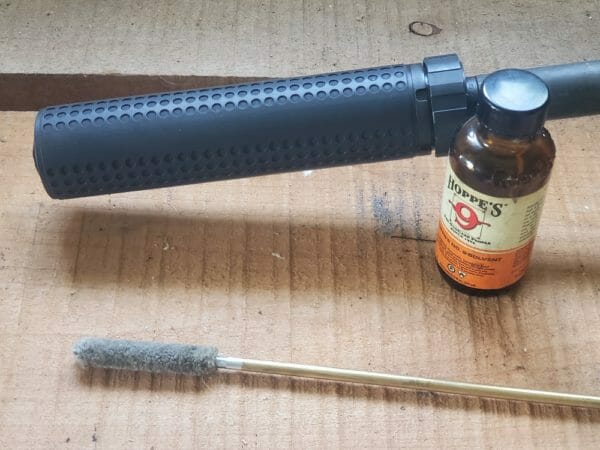
For years, people have been purchasing solvent traps and following Bureau of Alcohol, Tobacco, Firearms and Explosives (ATF) procedures to legally convert the devices into suppressors by filling out an ATF Form 1, paying for a $200 tax stamp, and going through all the checks and balances. The ATF has recently started rejecting all applications to make a suppressor. In a letter written to federal firearms licensees (FFLs) on November 20, the Bureau claims that solvent traps never existed under federal law and most have always been unregistered silencers.
Solvent traps are devices used to catch fluids from cleaning firearms. The device attaches to the barrel of a gun. These traps can be purchased from various retailers, notably Chinese websites like Aliexpress and Wish. Many Americans purchased these items to legally convert solvent traps into suppressors, but the ATF claims the term does not exist in its regulations.
One example the ATF gives is if there is an indentation that can be used as a drill guide. The agency states that these index markings have no purpose other than showing users where to drill to convert a solvent trap into a suppressor. This reasoning is similar to the ATF stating that an AR-15 with an index mark for the third hole is considered a machinegun. The ATF says that the solvent trap might still be a silencer even without indexing.
Other features that the ATF says make a solvent trap a suppressor are baffles, spacers, ported inner sleeve or tube, expansion chamber, end caps, and dampening material. In the eyes of the ATF, any of these could turn a law-abiding citizen into a felon facing ten years in prison and a $250,000 fine. This penalty is the same as being caught with an unregistered machinegun.
The ATF asks anyone with a solvent trap to contact their local field office to divest themselves from the device. If a user is unsure if their solvent trap qualifies as a suppressor, the ATF also asks the owner to contact the field office. The ATF doesn’t mention any immunity for the owner.
View: https://www.scribd.com/document/686276727/All-Ffls-Nov-2023-Open-Letter-Solvent-Trap-Devices#from_embed
ATF Claims Solvent Traps Were Always Unregistered Silencers
In a letter to federal firearms licensees (FFLs), the ATF claims that solvent traps never existed under federal law and have always been unregistered silencers.
www.ammoland.com
For years, people have been purchasing solvent traps and following Bureau of Alcohol, Tobacco, Firearms and Explosives (ATF) procedures to legally convert the devices into suppressors by filling out an ATF Form 1, paying for a $200 tax stamp, and going through all the checks and balances. The ATF has recently started rejecting all applications to make a suppressor. In a letter written to federal firearms licensees (FFLs) on November 20, the Bureau claims that solvent traps never existed under federal law and most have always been unregistered silencers.
Solvent traps are devices used to catch fluids from cleaning firearms. The device attaches to the barrel of a gun. These traps can be purchased from various retailers, notably Chinese websites like Aliexpress and Wish. Many Americans purchased these items to legally convert solvent traps into suppressors, but the ATF claims the term does not exist in its regulations.
“’Solvent traps’ are marketed as devices that attach to firearm barrels to catch excess solvent used when cleaning firearms,” the letter reads. “ATF has not classified any device as a ‘solvent trap,’ because that term does not exist in the relevant Federal statutes or implementing regulations.”
The ATF asserts that “some” devices marketed as solvent traps are suppressors because they have objective design features and characteristics that can be used to cut down on the decibels a firearm produces. The Bureau also looks at the individual parts to determine if a solvent trap crosses the line of being a silencer.
One example the ATF gives is if there is an indentation that can be used as a drill guide. The agency states that these index markings have no purpose other than showing users where to drill to convert a solvent trap into a suppressor. This reasoning is similar to the ATF stating that an AR-15 with an index mark for the third hole is considered a machinegun. The ATF says that the solvent trap might still be a silencer even without indexing.
Other features that the ATF says make a solvent trap a suppressor are baffles, spacers, ported inner sleeve or tube, expansion chamber, end caps, and dampening material. In the eyes of the ATF, any of these could turn a law-abiding citizen into a felon facing ten years in prison and a $250,000 fine. This penalty is the same as being caught with an unregistered machinegun.
“Other such characteristics may include baffles, spacers, ported inner sleeve or tube, expansion chamber, end caps, and dampening material, depending on the particular design of the device,” the ATF says. “While increasing the effectiveness of a firearm silencer, these same objective design features offer no advantages in collecting or filtering cleaning solvent.”
The ATF says that end caps by themselves are suppressors, even if an end cap is the only part an end-user has. The ATF clearly believes that a silencer does not have to be complete or functional before the owner crosses the line. Just the mere possession of a single part can send a person to prison if the ATF decides to prosecute.
The ATF also claims that users with solvent traps can not legally convert them into suppressors even if they complete the proper paperwork. Its reasoning is the originating company already created an unregistered suppressor and didn’t go through the appropriate steps to transfer it. Once those steps are skipped, they can never be made legal in the eyes of the ATF.“Over the years, many companies involved in marketing such ’solvent traps’ have asserted that they are permitted to manufacture, transfer, or import these items because they are not yet ‘complete’ and therefore do not qualify as ‘firearm silencers’ under Federal law,” the ATF writes. “However, this assertion is incorrect because a component of a ‘firearm silencer’ need not be fully functional before it is recognized as a ‘part intended only for use’ in assembling or fabricating a ‘firearm silencer.’”
Another issue facing solvent trap owners is that most items are imported from China. According to the ATF, a suppressor can not be imported, although a few exceptions exist. None of those exceptions apply to the civilian populations.
“Both the GCA, 18 U.S.C. § 922(l), and NFA, 26 U.S.C. § 5844, generally prohibit the importation of ‘firearm silencers’, except under certain authorized exceptions and with required licensing and registration,” the letter reads.
The ATF asks anyone with a solvent trap to contact their local field office to divest themselves from the device. If a user is unsure if their solvent trap qualifies as a suppressor, the ATF also asks the owner to contact the field office. The ATF doesn’t mention any immunity for the owner.
AmmoLand News would strongly encourage its readers to seek legal counsel before ever contacting the ATF.
View: https://www.scribd.com/document/686276727/All-Ffls-Nov-2023-Open-Letter-Solvent-Trap-Devices#from_embed
Last edited:


