
You are using an out of date browser. It may not display this or other websites correctly.
You should upgrade or use an alternative browser.
You should upgrade or use an alternative browser.
The requested work thread...
- Thread starter NavyVet83
- Start date

Haha. To many licensing requirements. 

- Joined
- Feb 3, 2023
- Messages
- 9,503
- Reaction score
- 11,073
- Points
- 168
I would have aired down the tires to 15 lbs.
Before bringing my Jeep out there I walked the property on foot to see what was going on. I aired the Jeep down to 20lbs and had no issues. He said he was doing ok with the truck until he stopped. Once he stopped, the truck started to sink… personally, there’s no way I would take a 8k+ pound truck into soft mud with all terrain tires.I would have aired down the tires to 15 lbs.
- Joined
- Feb 3, 2023
- Messages
- 9,503
- Reaction score
- 11,073
- Points
- 168
When I head to the beach, I'm driving in loose, fine sand and when it's been raining some fairly deep waterholes (most 2-3 feet) on the trails. Even with the big 37 inch Nitto's and the lift on my Gladiator, if you dont air down you are very likely to get stuck. The pavement ends almost ten miles south of my property. The local guy with a big ass tow truck rigged for off road charges $500 for every tug. More if you want him to tow your vehicle back to the pavement.Before bringing my Jeep out there I walked the property on foot to see what was going on. I aired the Jeep down to 20lbs and had no issues. He said he was doing ok with the truck until he stopped. Once he stopped, the truck started to sink… personally, there’s no way I would take a 8k+ pound truck into soft mud with all terrain tires.

- Joined
- Feb 26, 2022
- Messages
- 930
- Reaction score
- 1,170
- Points
- 108
So the funny thing about living in the high desert is how catastrophic water can be when it does show up. Because there is always none. Except when there is some, and quite often it all comes at once. The average annual rain fall is something like 8 inches and it usually arrives in bulk, taking people by surprise. There is no way to tell how deep that puddle is because the water is the same color as dirt. So be don't think your car can make it across or you end up like this:
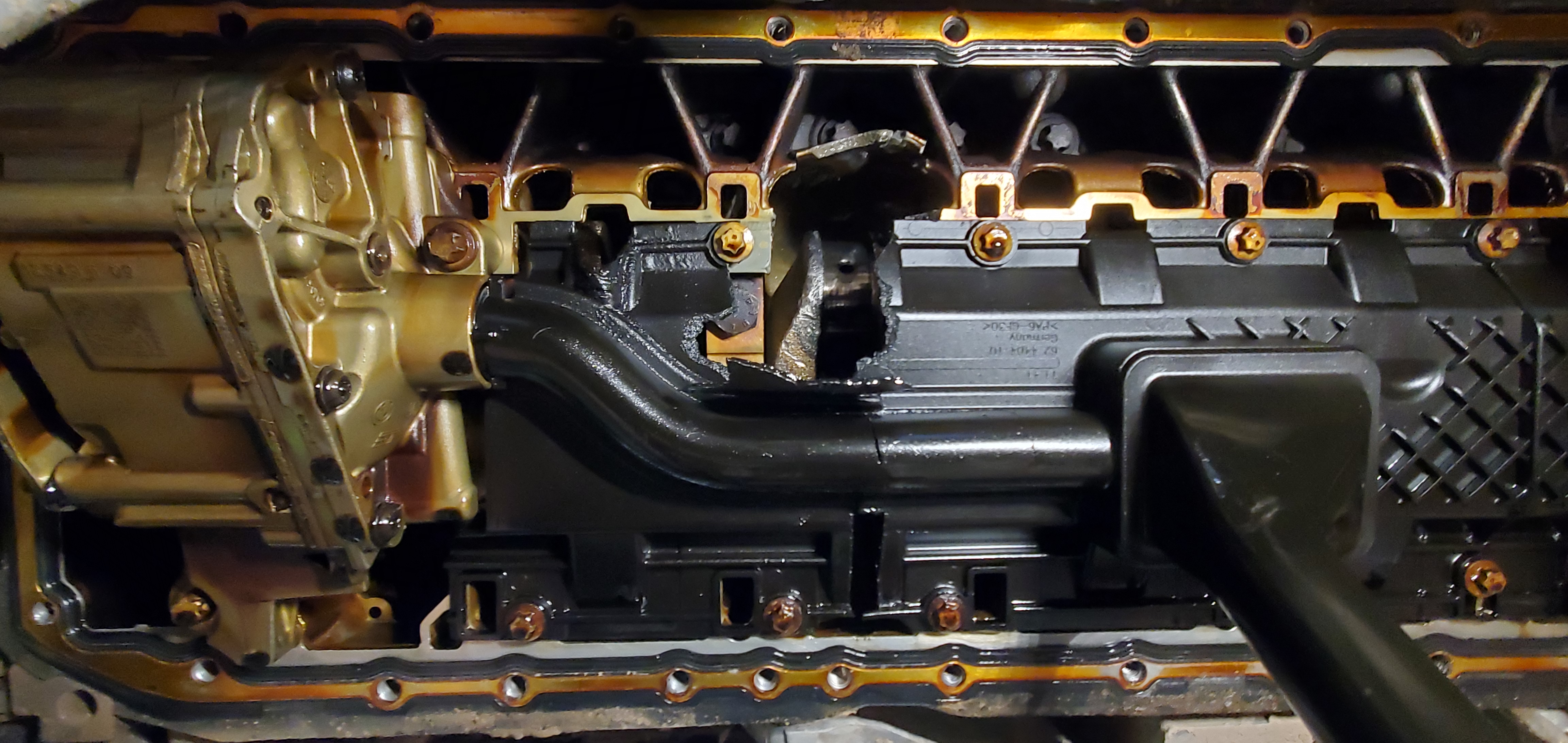
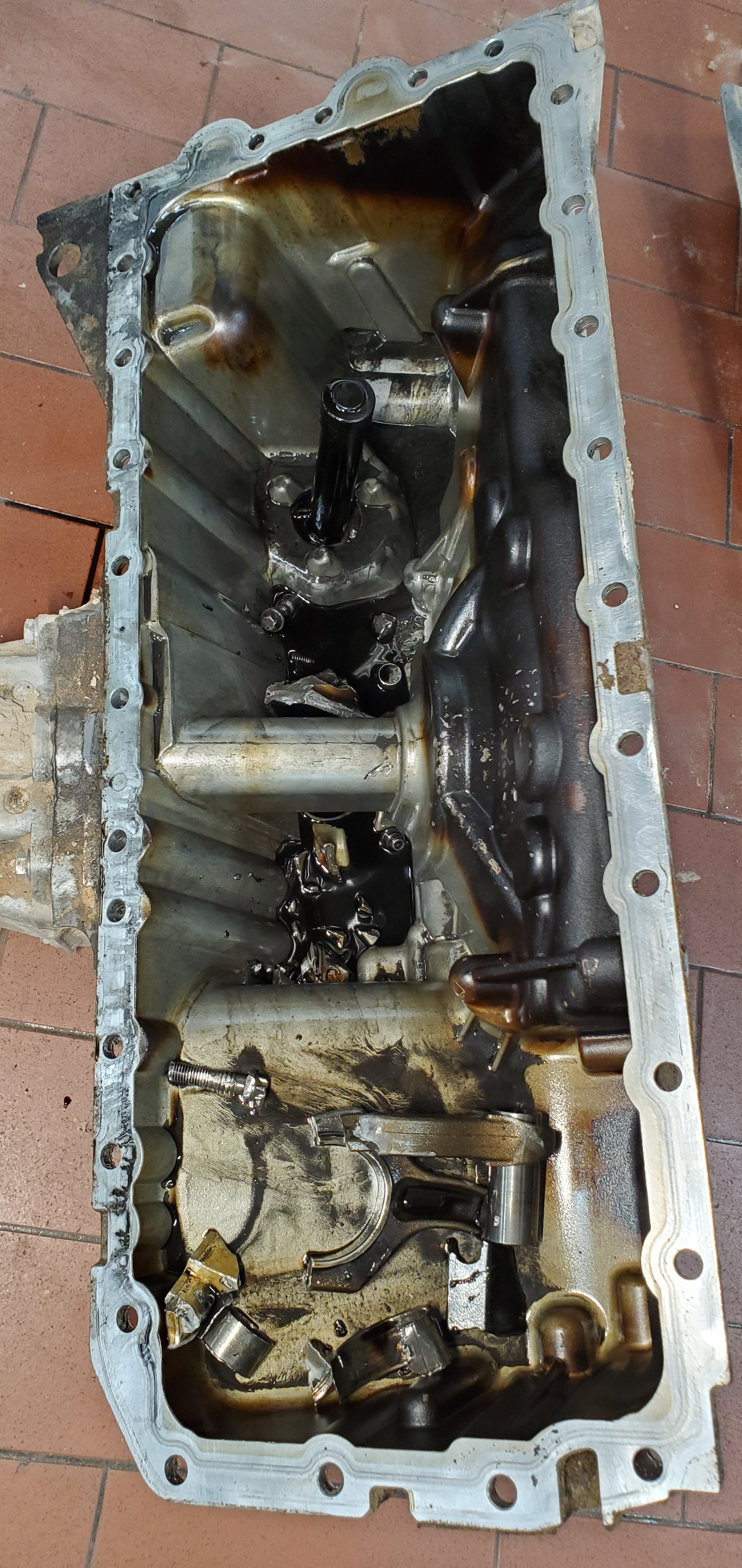

So that's what "hydrolock" looks like on the inside, eh? Ouch.So the funny thing about living in the high desert is how catastrophic water can be when it does show up. Because there is always none. Except when there is some, and quite often it all comes at once. The average annual rain fall is something like 8 inches and it usually arrives in bulk, taking people by surprise. There is no way to tell how deep that puddle is because the water is the same color as dirt. So be don't think your car can make it across or you end up like this:
View attachment 31099
View attachment 31100

Many liquids like water are NOT compressible. Water in the cylinder stops the piston before the top of the stroke and crank keeps turning, tearing up the con. rod. Same thing happens to coal-burning diesel trucks on the dyno when they over-inject fuel.So that's what "hydrolock" looks like on the inside, eh, Ouch.
 Only that is much more catastrophic as engines are turning much faster and combustion chamber much smaller!
Yep. Seen a few of those. I’m replacing an engine at work right now in an Amazon Van (Promaster 3500) that the driver took through high water. I’ll get pics or a video Monday.

- Joined
- Apr 2, 2022
- Messages
- 4,071
- Reaction score
- 3,639
- Points
- 168
One of our sons and his wife are cross-country truckers and just went through Mississippi...they said the river flooding was absolutely terrible. water everywhere, so much overflow. Yuck. God help those people back there....
- Joined
- Apr 2, 2022
- Messages
- 4,071
- Reaction score
- 3,639
- Points
- 168
Aye. water does NOT squeeze. Not. One. Bit. Oops.Many liquids like water are NOT compressible. Water in the cylinder stops the piston before the top of the stroke and crank keeps turning, tearing up the con. rod. Same thing happens to coal-burning diesel trucks on the dyno when they over-inject fuel.
- Joined
- Feb 3, 2023
- Messages
- 9,503
- Reaction score
- 11,073
- Points
- 168
It seems like all modern cars end up blowing head gaskets or have to have the head(s) replaced. Maybe I just never paid that much attention. I dont recall this being something too common.
Very common nowadays. Heads are cheap aluminum and warp at the slightest hint of overheatingIt seems like all modern cars end up blowing head gaskets or have to have the head(s) replaced. Maybe I just never paid that much attention. I dont recall this being something too common.

I’ve been driving cars with aluminum heads, really aluminum engine blocks too, for over 30 years with no issues. Must be problems with US vehicles. Now, some if those engines need the bores replaced or rehoned as they have been using aluminum engines and bores for over 40 years. Wish they would just use sleeved engines but keep the aluminum everywhere else as that seems to be the best for longevity and wear. Cool engine with the aluminum but tough as nails iron bore.
- Joined
- Apr 2, 2022
- Messages
- 4,071
- Reaction score
- 3,639
- Points
- 168
I'm wondering if this is in proportion to the number of modern engines running boost ie turbo or superchargers, or both.It seems like all modern cars end up blowing head gaskets or have to have the head(s) replaced. Maybe I just never paid that much attention. I dont recall this being something too common.
Very possible. For the 18+ Jeeps (JL and JT’s) there is a 2.0 turbo 4cylinder option. If it hasn’t blown a head gasket, you’ve just been lucky so far. Dealerships are actually not even doing head gasket repairs on these things. We are just replacing engines. It’s WAY easier as the entire front end of the new jeeps comes off in about 45 mins.I'm wondering if this is in proportion to the number of modern engines running boost ie turbo or superchargers, or both.
- Joined
- Feb 3, 2023
- Messages
- 9,503
- Reaction score
- 11,073
- Points
- 168
I can imagine replacing it all being easier. On the rare occasion I lift the hood... man, it is crowded under there.Very possible. For the 18+ Jeeps (JL and JT’s) there is a 2.0 turbo 4cylinder option. If it hasn’t blown a head gasket, you’ve just been lucky so far. Dealerships are actually not even doing head gasket repairs on these things. We are just replacing engines. It’s WAY easier as the entire front end of the new jeeps comes off in about 45 mins.
I would go ballistic if I had a new Jeep and they told me... welp... you need a new engine. Mine are naturally aspirated sixes. All good so far.